

🌏 At the End of the Challenge Program...
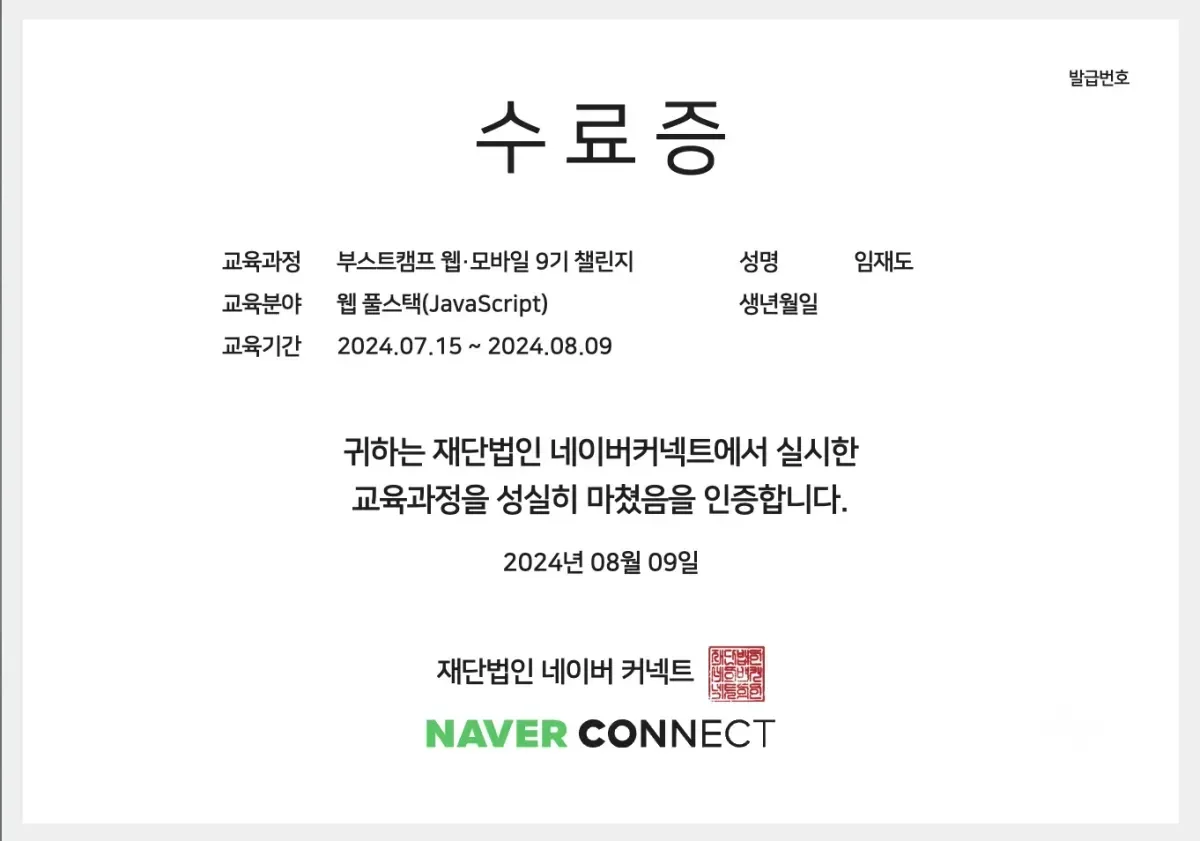
Before I knew it, the Naver Boostcamp Challenge program, which felt both long and short, has come to an end.
And now, based on all the experiences I've had, I'd like to reflect on the entire program.
There might be a lot of overlap with what I've written before, but this time I want to focus on growth as I share my story.
🌏 Starting the Challenge Program...
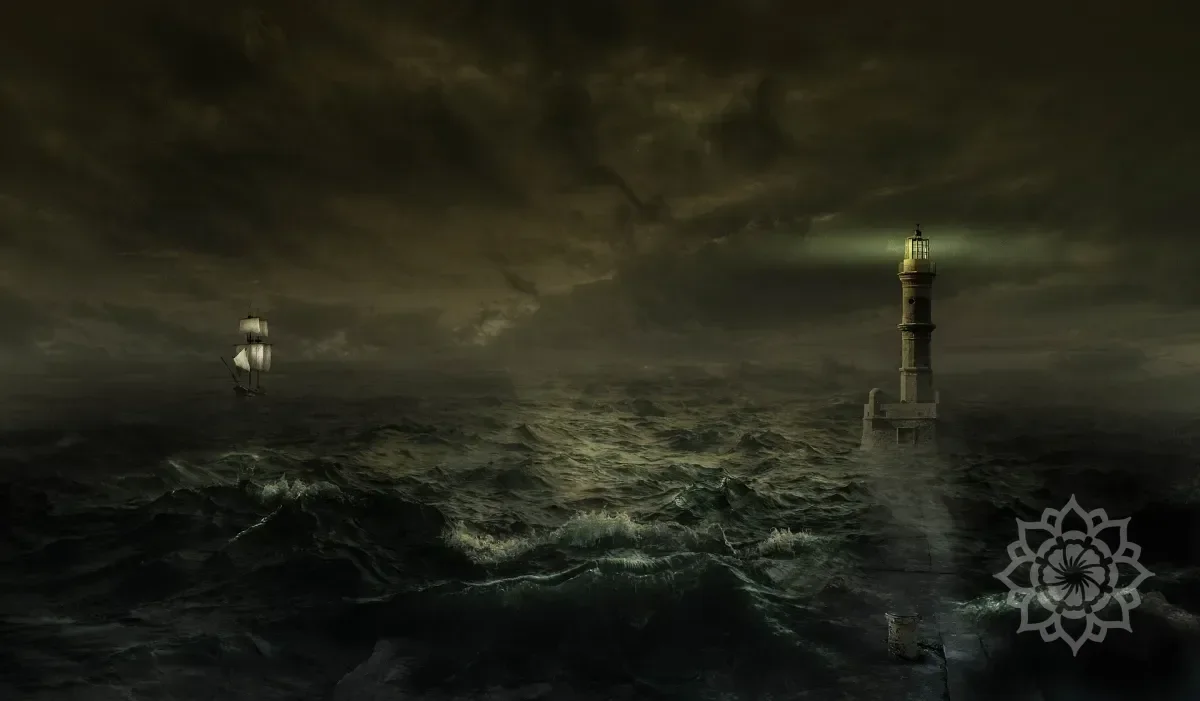
Before starting the challenge program, I was like a ship adrift on the vast ocean.
I was wandering around like a ghost ship, severely lacking in provisions and resources.
Neither moving forward nor staying in place, this state continued.
Not going forward, not going backward. I was just a question mark itself.
In that process, I encountered various connections in passing. And those connections gradually guided me toward the path I should take.
Then I met Naver Boostcamp.
It was like the moment I discovered a single light in the vast ocean.
And my journey through the challenge was the process of following that light, and at its end, it's a story of discovering my own lighthouse and heading toward it.
🌏 What I Wanted to Achieve in the Challenge
I went through various processes to enter the challenge and began walking through the program.
And in that process, I developed one mindset I absolutely wanted to maintain and several goals.
This writing is quite long. I tried to include as much of my deliberations and the reasoning behind my choices as possible.
Go to view my review on Naver Blog
I won't elaborate on this separately since I wrote about it in my previous reflection. (You can check it through the link above)
First, the mindset I held was just one thing.
I will not leave any regrets while going through the challenge program.
Now that I've reached the end of the challenge, I have some wishes that I had challenged myself more on certain elements, but I have no regrets.
That's because I was able to give my best, and I achieved the goals I'll describe later.
The goals I wanted to achieve are as follows.
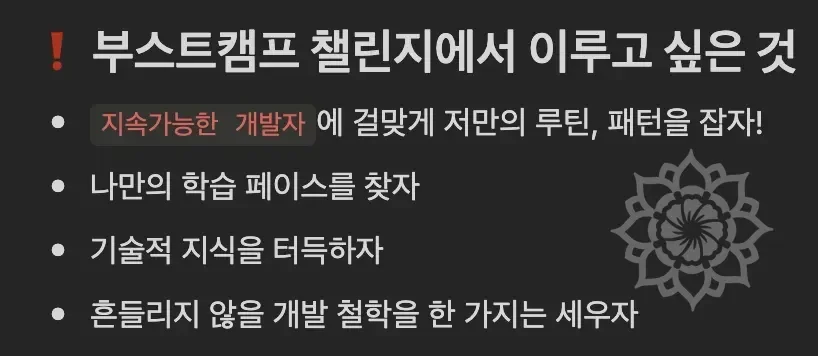
This is the goal I wrote on Notion on the first day of the challenge.
I think I wandered for quite a long time on the vast ocean.
And finally, I met the challenge - a lighthouse that would take me out of the vast ocean and onto the right track, a salvage ship.
So I didn't want to wander anymore.
Frankly speaking, I wanted to become more mature, to grow up.
During the week before entering, I reflected on myself and analyzed various problems.
And after giving my best for a month, if the things above were created, I thought I wouldn't repeat the past mistakes and failures.
So I set the goals above.
And as I write this now, I was able to find my own answers for each of those elements.
🌏 How Did the Challenge Program Proceed?
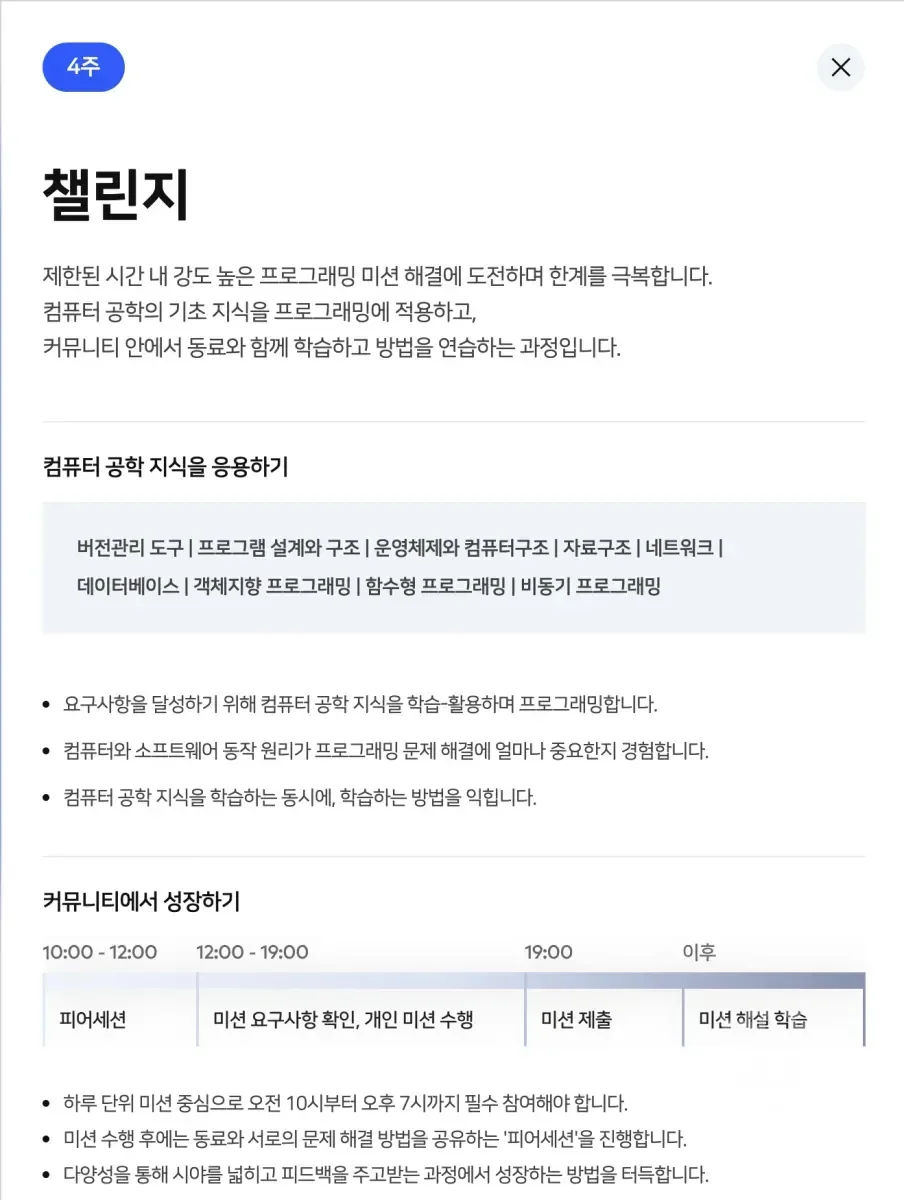
If you ask what the challenge program is, I think I could answer like the above.
Based on CS knowledge, missions are given every day, and sometimes alone, sometimes with colleagues, it's a program where you not only acquire related knowledge but also develop your abilities as a developer.
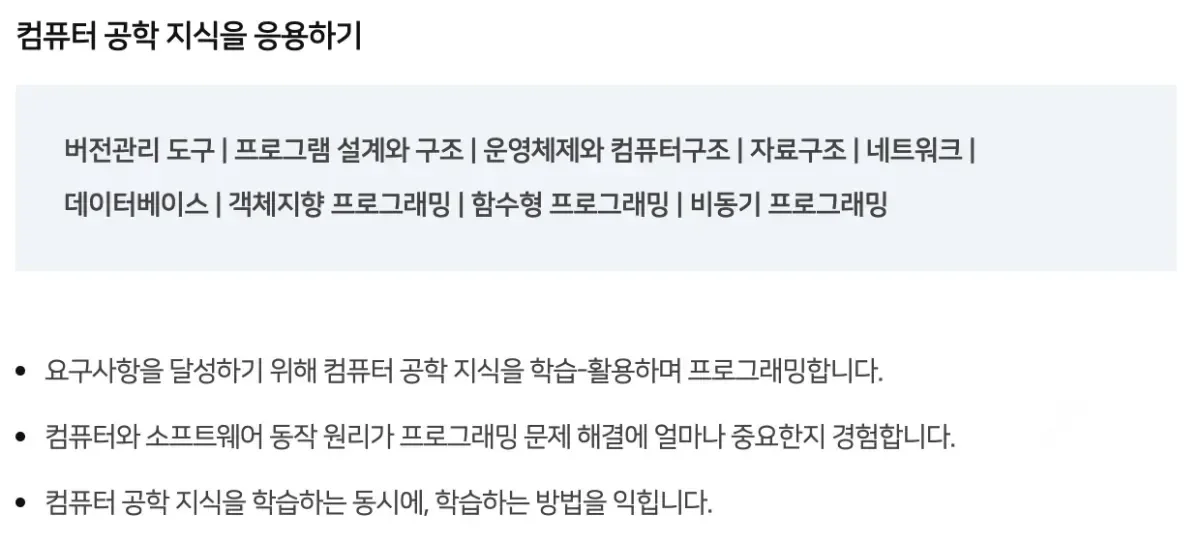
You can learn the elements shown above, and under the philosophy of Learning By Doing, instead of just memorizing theory, you learn by actually programming based on missions.
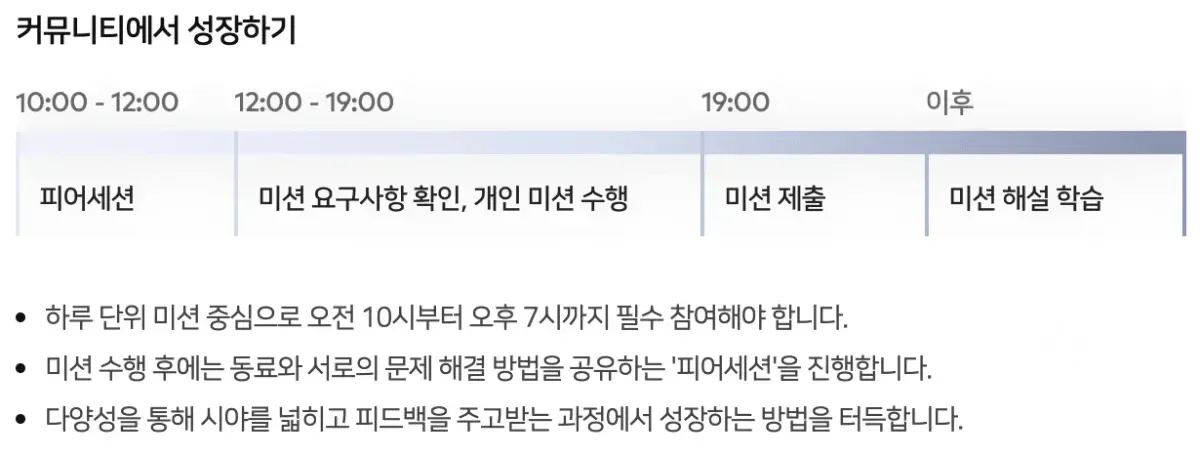
That doesn't mean there's no guidance.
They only provide maximum autonomy for solving missions, while all activities are presented with how they should be done.
However, how to do things within that is purely up to us to judge, decide, and act.
For example, peer sessions are times to exchange feedback on missions with colleagues or share thoughts.
At this time, only the fact that peer sessions should be done at this time and some examples or simple guides about a few methods are given.
How to conduct the peer session is something we create ourselves.
In fact, every peer session I had flowed differently, and while listening to other campers' stories, I felt that it was completely different from what I had done.
As a result, naturally, instead of just talking about code or missions, we started doing meta-cognition about the methods together with colleagues.
So, according to what each person lacked or needed, we determined and proceeded with our own methods.
Through this, I was able to learn not only programming skills but also communication skills, design, CS knowledge, and so much more.
Through this process of judging, deciding, and executing based on minimal guidance, we were able to grow together.
And while going through the challenge program, I used to express such activities with my colleagues like this. 😁
The Naver Boostcamp Challenge program is not about following what someone else has decided.
It only serves as a lighthouse, and the culture on the ship we've boarded is something we create ourselves.
We are now creating a culture, improving it, and achieving growth.
🌏 How Did I Digest the Challenge Program?
As I said earlier, the challenge program is culture.
Conversely, this also means that if you can't enjoy that culture and drift away, you won't gain anything.
When I first entered the challenge, I set clear goals.
And I tried to utilize the missions and various elements in the challenge program to achieve my goals.
When you perform a mission, various choices are given.
Whether to focus on learning, focus on programming, focus on design, focus on improvement, etc... Really many choices are given.
It would be nice to do everything, but as you can see in the photo attached above, time is limited.
That's why selection and concentration were necessary.
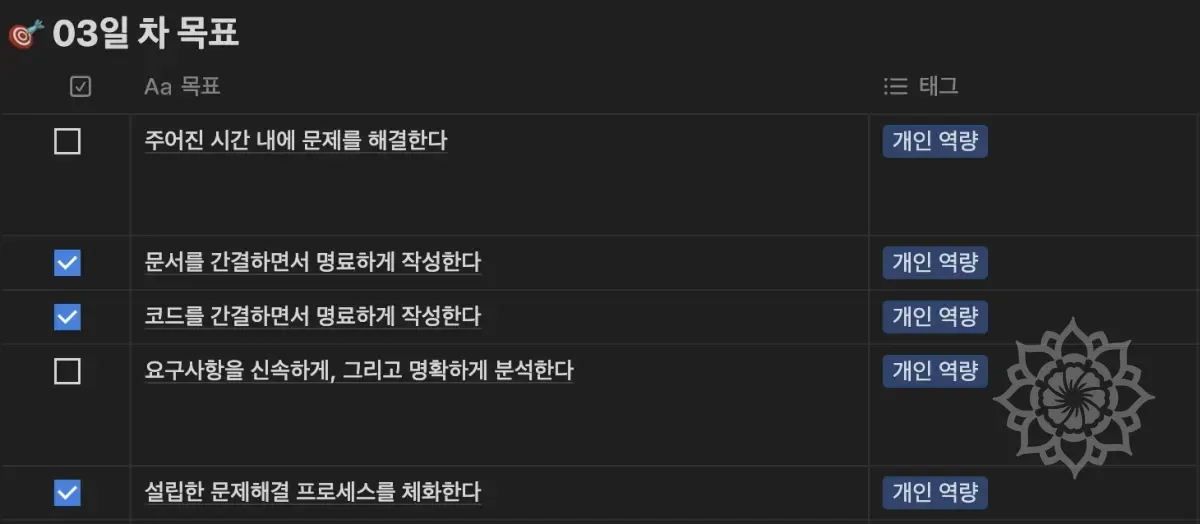
So I set goals I wanted to achieve every week, and again set goals I wanted to achieve on a daily basis.
The above is part of the goals I actually set every day. There are more goals for each day, but since many are related to missions, I only attached goals related to personal capabilities.
In this way, I achieved selection and concentration. I selected one big goal to achieve each week and set related goals every day to make gradual progress.
Does the daily goal setting look like quite a lot?
Actually, I didn't just set goals; I did one more process, which is why it came out like that.
That is reflection.
As you go through the challenge program, you make really many mistakes and failures.
I'm a bit slow and dazed, so I experienced many mistakes and failures early in the challenge.
Interestingly, I made the same mistakes and the same types of failures several times.
Regarding this, while thinking about how I could improve, based on the know-how I learned from conversations with fellow campers on Slack, the community used in the challenge, I tried to continue the following activity throughout the challenge program.
Write a reflection every day, even if it's just a single word or a single line
So sometimes I wrote on Notion, sometimes on a notebook, reflecting a little every day.
Reflections sometimes became just a record of the day, sometimes a reminder note, sometimes an improvement log, and sometimes took on the character of a praise log.
I think I tried really various methods.
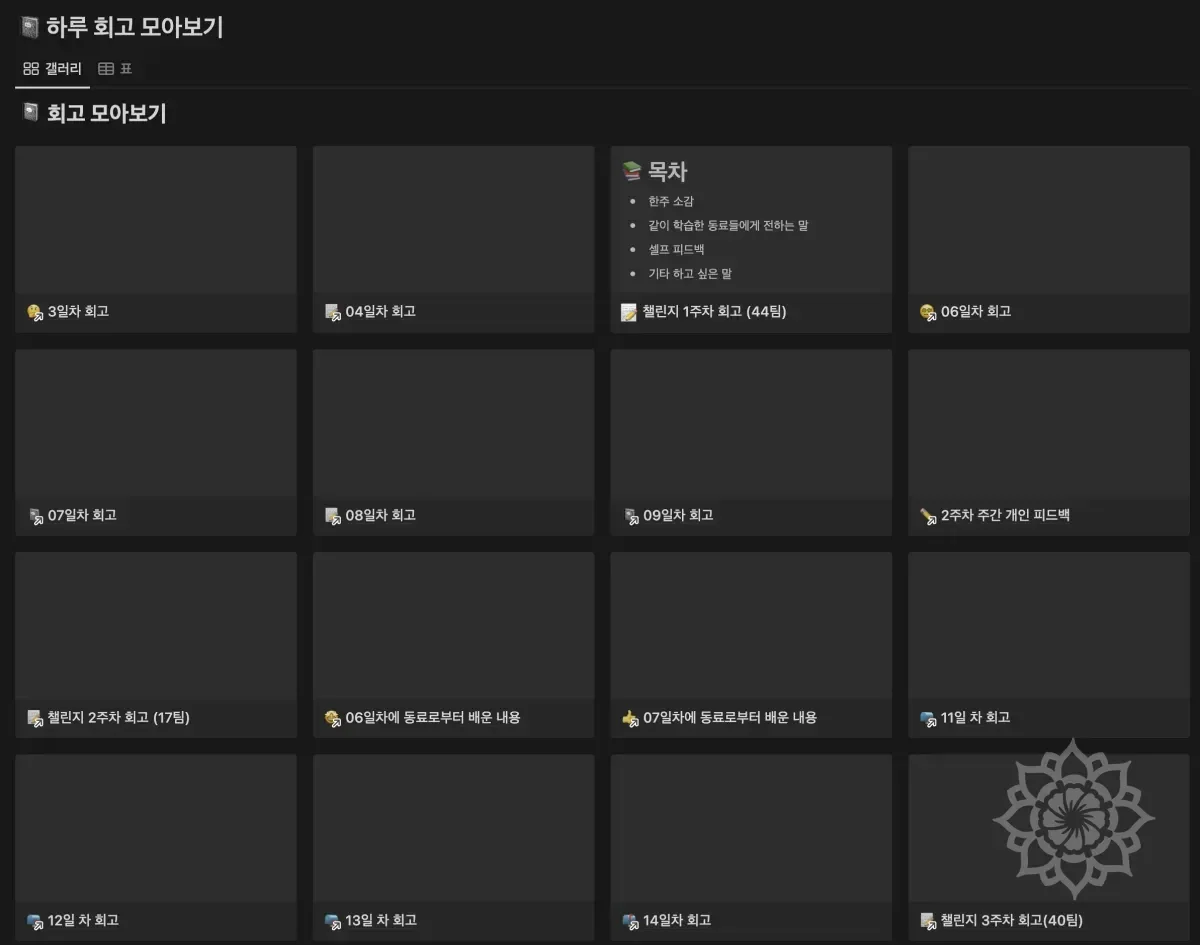
The above is part of the reflections I wrote on Notion, and even just looking at this, there's quite a lot, right...? 😁
But actually, there's much more than that. 😁 I really wrote reflections little by little on various platforms without thinking too much about it.
And based on this, I set weekly and daily goals and tried to compensate for my weaknesses and strengthen my strengths.
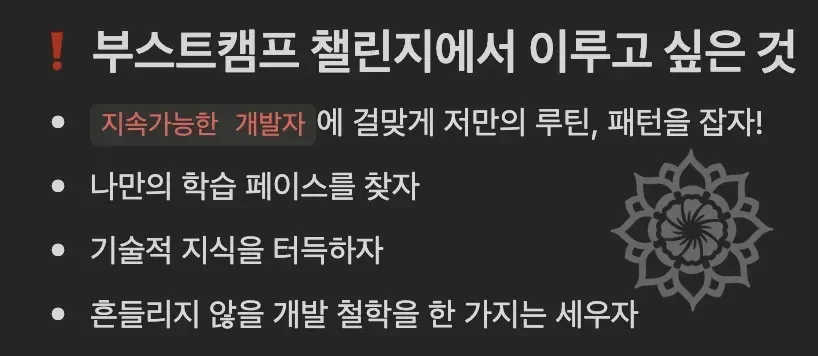
At the same time, since I wrote down all my concerns and realizations, now that the challenge is over, I think I can answer all of the above content in my own way. 😁
🌏 Colleagues Who Helped Me Move Forward When It Was Hard
Boostcamp Challenge Program === Culture we create based on growth and challenge
I'm aspiring to be a web frontend developer. So, I tried expressing it using JavaScript's equality syntax.
How is it? Does it resonate with you?
The challenge program was literally a challenge.
Tasks that could always be solved with plenty of time were not given. (At least for me...)
Every time, missions were given that were hard to finish even if I stayed up all night until right before the deadline.
If the mission implementation seemed a bit easy, the knowledge was often really abstruse... Due to the nature of knowledge, there were many cases where I thought I knew but didn't... Cases that had no end no matter how much I dug... Cases where I made something but it was wrong from the beginning...
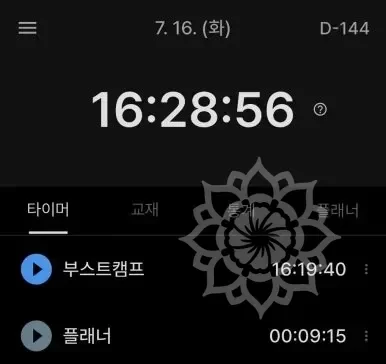
Actually, I don't think I properly slept while going through the challenge program.
The above is a record of the time I spent performing missions each day. I captured some of what I had recorded.
Even at a glance, it's a lot, right? haha.. You end up investing really a lot of time.
Not because it's forced, but just because that's what happens when you do it. When it seems like it's almost going to work but doesn't, stubbornness kicks in, and sometimes you get hooked on one piece of knowledge... For various reasons, staying up all night was really common.
Purely feeling growth gradually, unknowingly.
As a result, it was natural that my body broke down.
It says 16 hours, 18 hours, etc., but a day is 24 hours, right? Actually, that's excluding time for eating and such, and it's the result of investing almost continuously except for sleeping 1-2 hours almost every day. haha..
Since I couldn't sleep properly, my mind became hazy, my heart beat fast, and sudden severe muscle pain came, among really many issues..
Even if I caught up on sleep on weekends, I didn't recover, and there was an indescribable fatigue, should I say...?
So actually, I collapsed in week 3. haha.. A short burnout had come.
I was so exhausted and tired that I thought, should I give up here...? Should I just rest today...?
But I said earlier, right? The challenge program has missions you do alone, but also missions you do with colleagues.
The colleague I worked with encouraged me tremendously. They said I could do it, don't give up here. Thanks to that, I was able to squeeze out strength and perform the mission.
And instead of having weak thoughts like "giving up," I started thinking about how to overcome this situation and how to never experience this again.
And when I looked at Slack, which was the communication channel among campers during the challenge program.. It seemed this wasn't a problem only I was experiencing. haha.
I wasn't the only one staying up all night, and I wasn't the only one having a hard time. haha.

This is actually what the MC, who is part of the administration, left on Slack in the middle.
The administration was so worried that everyone was burning with growth desire, stubbornness, and passion. 😁
From this point on, I really started listening to a lot of stories around me. About the difficulties of fellow campers I was working with, how they overcame them, how they manage their condition, how they approach missions and what they focus on, etc.
I tried to learn the know-how of my colleagues, and thankfully, they readily shared their know-how without hesitation. Through this, I was able to move forward without giving up in the middle haha..
As a result, I was also moved, and I wrote on Slack because I wanted to share the experience of overcoming burnout haha...
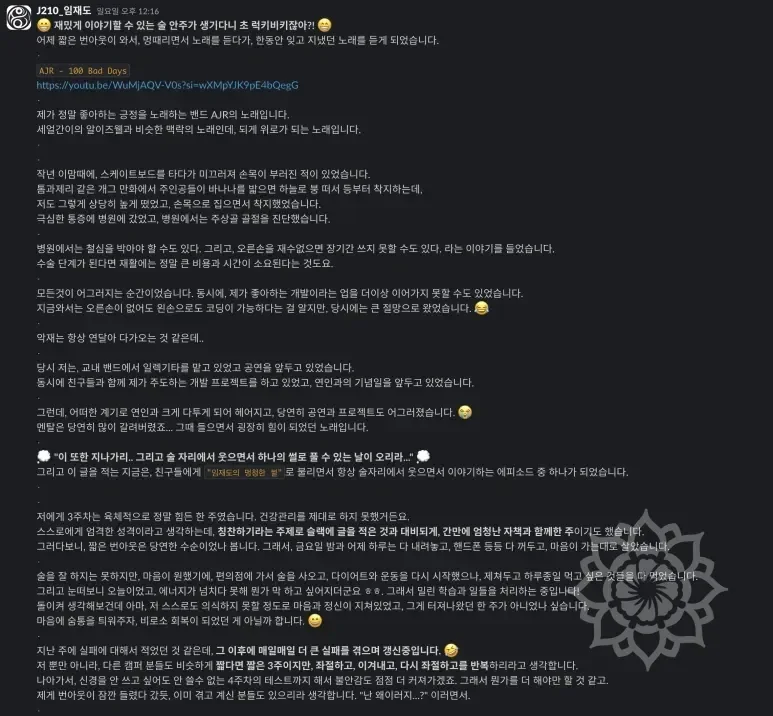
This is what I actually posted.
Reading it again makes me feel embarrassed haha..
It's a hard process, but I could overcome it because I had colleagues.
Leading each other so we can finish together, that was the culture of the challenge.
I just wanted to share the story above. Before I knew it, I ended up talking at length. 😁
🌏 So What Growth Did I Achieve?
I was able to become more mature, to grow up. Finally, I was able to start climbing the path toward the developer I want to become.
When I look back after finishing the challenge program, I think I can express it like the above.
I was able to find answers, however small, to the goals I set above, and all that's left is to slowly look deeper into them going forward.
(Answers don't mean they won't change! I think life is not multiple choice but essay-style!)
🧑💻 Drawing the Image of the Developer I Want to Be
Through the challenge program, I was able to draw the image of the developer I want to become.
1. A person who codes dreams
2. A person who can solve small problems
3. A person who creates culture or contributes to culture
Actually, when drawing such an image, I don't really like using the word developer. haha...
It feels like it limits my thoughts, career path, and my dreams as a person.
So, I prefer using the expression "person" instead of the word developer, which is why I wrote it like above. 😁
🧑💻 Establishing My Own Problem-Solving Process
Also, I was able to find my own approach to problems!
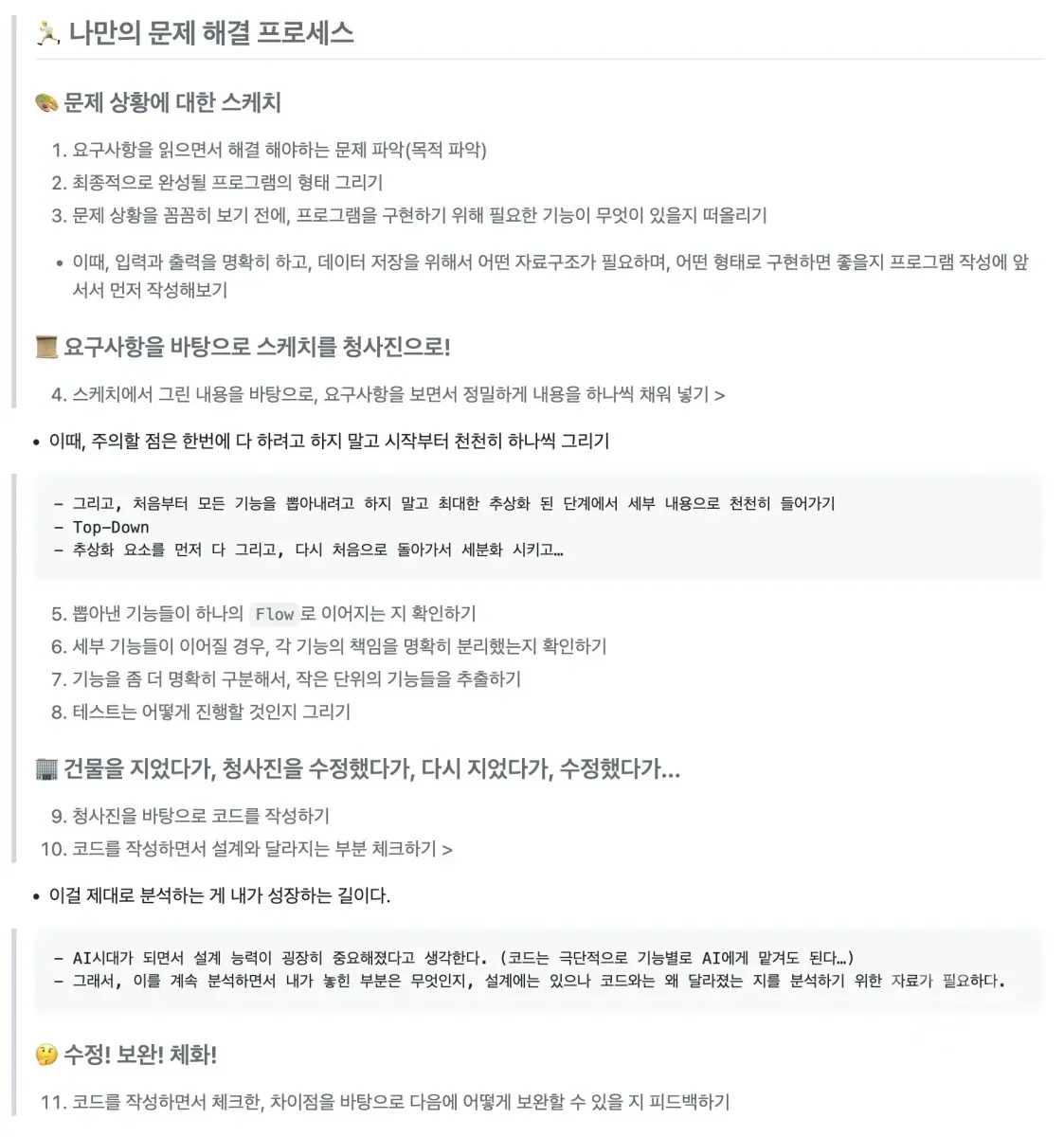
This is my own problem-solving method...!
There are differences in scale, but I was able to establish my own method by comparing it to building a building.
Sketch → Draw blueprint → Coding → Feedback
And some of the above methods have changed slightly and settled in my mind as the following concepts...?
Sketch: Requirements analysis, rough design
Blueprint: Expression in formalized methods such as pseudocode, diagrams, etc.
This is not finalized, and it will probably change a lot in the future, right?
However, I'm quite proud because instead of spacing out when I see a problem, I now have a reference point for how to approach it and which approach was most efficient. haha..
🧑💻 Mastering My Own Learning Method
Not only that, I was able to establish my own learning method. I really put in a lot of effort and thought to efficiently acquire the CS knowledge learned in the challenge program!
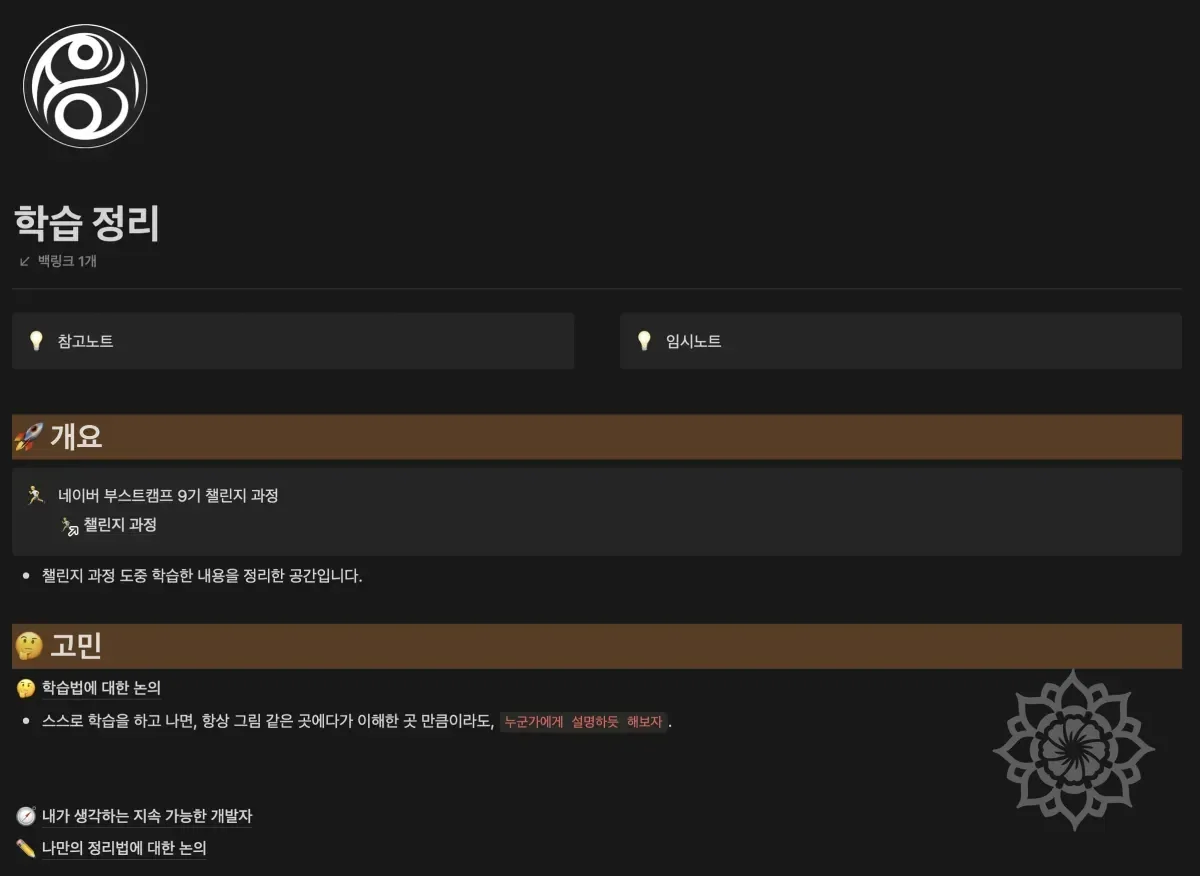
This is the format I used to organize the learning content from the challenge program. haha.
I won't mention details since showing them in detail would be a spoiler for the missions. 😁
Based on Zettelkasten, I started learning by collecting small notes.
For development studies, this was really effective for me...?
Of course, the method might continue to change, but like the problem-solving process earlier, I'm very proud because I've achieved meta-cognition about the method and established a standard.
Beyond being proud, it's also good because it's become the driving force for me to continue enjoying development life even after the challenge ended.
And do you know what the biggest growth I achieved is?
I stopped being afraid of failure.
So what if I fail? Just improve and fix it, and don't make the same mistakes and failures next time, right?
I think having the mindset above is the biggest growth.
At first, I was so afraid of failure that I had to be perfect... But the thought that it's okay to be immature or fail has settled in.
I'm not saying to repeat failures. Anyone can fail and make mistakes, and in the end, what's important is how not to repeat this and how to improve in a better direction.
That makes sense because the challenge program was a continuous cycle of mistakes, failures, overcoming, and growth every day.
Lastly, gaining colleagues who can walk together can also be seen as the biggest growth haha...
🌏 So What Will I Do Now?
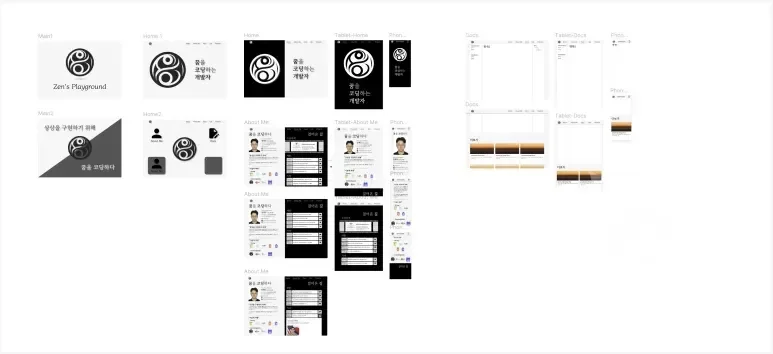
The challenge program has just ended; I don't think the challenge of my life is over.
In the challenge program, I was able to break free from perfectionism, and even while preparing for failure every day, even while preparing for things not being perfectly completed, I focused on what I could do.
So I'm going to challenge myself to create a personal website, which I had been putting off.
I'm going to create a website that well incorporates the realizations I gained from the challenge program, learning summaries, and various elements!
I'm going to take the first step toward a site that I'll update and maintain for life while continuing my developer career.
Of course, I'm a frontend developer, not a designer, so the design might be awkward.. but so what haha..
Rather than using existing templates, this is a project I started because I wanted to try making it from A to Z by myself.
It's still in the planning stage, but I'm excited to see how it turns out haha.
🌏 What Do I Want to Say in Closing?
Just in case, I'll leave some words that might be helpful for those who are considering Naver Boostcamp after me.
What I've been trying to convey through writing so far is as follows.
Naver Boostcamp === Culture we create based on challenge and growth
Boostcamp absolutely doesn't spoon-feed you. This is not a place like a cram school for exams.
A culture. At least that's how I felt.
It's a culture created by people who are all running hard toward growth, coming together.
As a result, if you don't do anything yourself, you won't achieve any growth.
I think it was important to try to enjoy this culture somehow.
I tried various things beyond what I've described, and above all, like the image of the developer I want to become, "3. A person who creates culture or contributes to culture,"
I wanted to go beyond learning and actively contribute to forming that culture within this.
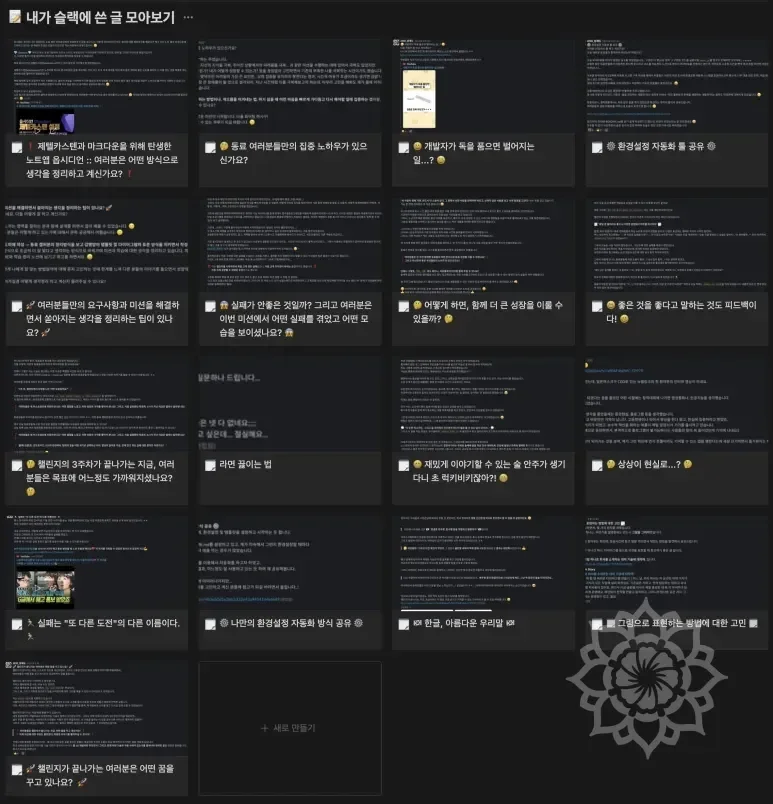
Above are the posts I wrote on Slack for sharing thoughts and opinions.
I separately scraped them to look at and learn from over and over.
Beyond those, I really had so many conversations, and since I couldn't include them all, I only wrote down the content I asked fellow campers. At least, I wanted to keep those by my side for life.
And I also tried to create a culture of exchanging feedback from various angles through peer sessions, like "Let's write rolling papers for each other!"
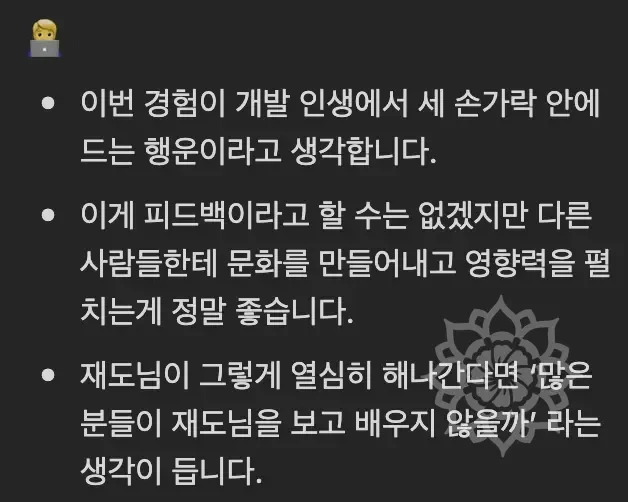
As a result, a colleague who worked with me left the following message on a rolling paper.
This was a colleague who was with me when I was very sick in week 3, and seeing those words gave me great strength to complete the entire program.
What I felt about Boostcamp was that it was a culture.
Therefore, if you happen to apply, and if you enter the challenge program, I think you'll be able to gain much more than this slow-witted me!
So, I hope you actively create culture!
And if you're hesitating to apply, if you want to experience such a culture, please apply and gain an even better experience than what I felt! 😁
Thank you for reading this long article! I hope great luck follows everyone on the paths you're walking! 👍